

What Can I Do To Repair My Septic System Drain Field
Y'all may demand to replace your septic field lines, or drain lines, if they become clogged up with debris, dirt, or roots. Instead of trying to repair the erstwhile lines, information technology is much easier and effective to install new lines. You won't have to worry about replacing the tank, then, thankfully, that cuts down on the toll quite a bit.
Still, yous should be prepared if yous decide to replace your bleed field because doing the job yourself volition require that you rent a backhoe. This type of project is going to exist somewhat expensive any way you handle it, but it's something that'due south ameliorate done early before the problems become likewise overwhelming. Below are some basic tips to help to get you started.
Step i - Calculate the System's Flow Rate
Yous'll need to figure out the flow rate of the system as chances are the output of h2o will be much more than the leach field and the tank were designed to handle effectively. Don't forget to accept into consideration all of the appliances in the house that use water, including any renovation plans that include adding some other bath or kitchen.
Step 2 - Do a Perc Test

A perc examination (or percolation test) will help you determine the speed with which the effluent is absorbed into the ground. A high percolation rate indicates your leach field can be modest, and if it is depression the leach field volition need to exist to be much larger. One inch of percolation in about four minutes would be considered a high rate, in which case your field can stay in the 5000 square feet range. A rate of one inch per 60 minutes is a irksome rate of percolation and your leach field space will need to have twice the amount of infinite than you lot would demand if you had a small perc charge per unit.
Step 3 - Dig the Proper Amount of Space
When you dig the space for the leach field, brand certain to dig either eighteen to thirty inches deep and 8 to 12 inches wide, respective to your particular design.
Step 4 - Lay Your Pipe Flat
When laying your perforated pipes, keep parallel lines across the field and lay them in a flat formation or slightly tilted to ensure that effluent won't flow out of the pipe'south end. If that happens you've ruined all your hard work and yous'd have to start all over again.
Pace five - Keep the Proper Distance Between Trenches
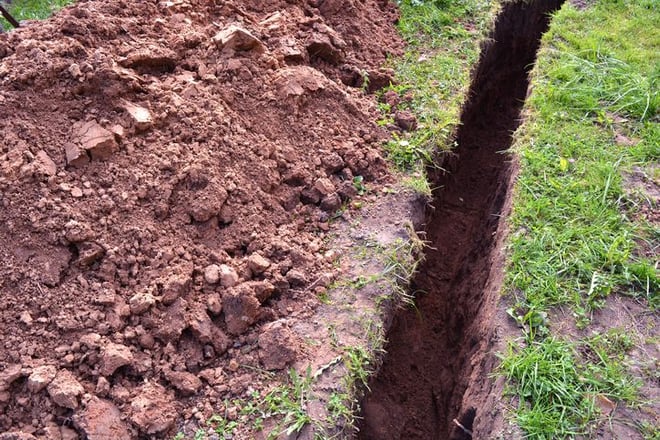
You'll want to be sure and have at least six feet between the holes y'all dig. This way, you tin but put in new pipes in between the existing ones if y'all always need to practice this job again.
Stride 6 - Consult with Building Authorities
These steps are some bones tips to be enlightened of as y'all tackle this project, only y'all should accept the time to call or visit your local sewage or buildings department to get information on specific edifice codes or requirements you should exist aware of.

Source: https://www.doityourself.com/stry/6-tips-for-replacing-a-septic-field
Posted by: mccarthymecer1946.blogspot.com
0 Response to "What Can I Do To Repair My Septic System Drain Field"
Post a Comment