

How To Repair Holes In Brooks Shoes
I used to wearable holes in the dorsum of my shoes very speedily. While the rest of the shoe was fine, 1 tends to throw them out and buy new ones considering they were just then uncomfortable. When this happens, the shoe lining opens up and cream spews forth. If you await closely, you'll run across the hard plastic of the heel counter. This signals the unfortunate, and sometimes premature, demise of your shoes. ? Or does it? ?
Equally it turns out, this is a very mutual issue. In fact, I hear from people every week with this exact result. So let's await closer at why it happens and how you can prepare it. I take to admit, this has happened to many of my walking, running and casual shoes. Thankfully, I've plant a way to prevent it. The thing that fixed information technology for me was the thing I apply to prevent heel blisters – which I suffer from far too easily. And then I've killed ii birds with i rock and I could not be happier about that!
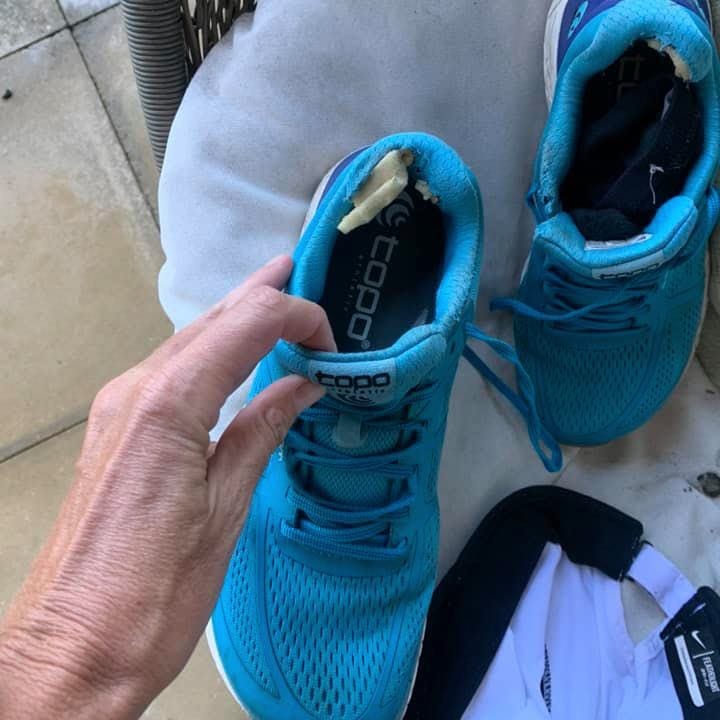
Who wears holes in the back of their shoes?
All sorts of people (immature/old, male/female) during all sorts of activities (walking, hiking, running, ultrarunning, sports, activities of daily living) with all sorts of feet and biomechanics. Here are a few examples:
Hiking footwear
"What causes my heel to swallow the padding out of the back of my shoes? Shoes too big, or too short? Or am I buying shoes with oddly shaped heel cups? Whatever suggestions would be great appreciated! First pair were Inov8 Rocklite 295 size 10s. Loved the shoes but ultimately had to get something with more than support. I wore them for threescore miles hiking and a few short runs. My heel wore through the cloth on the heel cup and was working on the padding when I quit using them. Second pair were La Sportiva Bushidos size 42.5s (United states 9.5). After wearing these for two months, including multiple day hikes, my heel had completely worn all the material and padding out of the heel cup. Looking into the shoe you would run across the plastic frame of the heel cup through a hole the size of a quarter. In both shoes I could unremarkably tape my heel to prevent blisters, but the shoes and socks notwithstanding vesture out."
Bakpacking Light
Running shoes
"Why do I habiliment out the heels on the INSIDE of my shoes? It goes all the fashion to the core of the shoe where my heelbone (if that exists) touches the rear of my shoe. It basically rubs enough and wears to give me a blister. I cannot discover a pair of shoes that I can not wearout? Weird that the sometime Nike structure Triax viii didn't wear on me, but everything else does, Asics, Saucony, etc."
Allow'due south Run
"How can I prevent my shoes from ripping in the back (in the heel linings)? Then later on searching this subreddit I got a fantastic pair of New Remainder's, they stone. The only affair I'm worried virtually is what happened to my old pair of running shoes, the heel linings somewhen got ruined, they kind of looked similar this at one indicate, it'due south non my bodily pair simply the tears are somewhat similar. All I would exercise is run with them on the treadmill. So my question is, is in that location anything I tin can exercise to prevent it from reoccurring with my new pairs?"
Reddit
Why does it happen?
I'm not enlightened of any research on this issue. However, I do have some pretty firm thoughts on potential contributing factors.
Haglund's
There is one bony deformity that will very probable wear a pigsty in your shoe's heel counter earlier their time is up and that'southward a Haglund'south deformity. Ameliorate known as "pump bump". Essentially, at that place'southward an extra lumpy bit on the back of your heel. This causes an increased focal pressure both on your shoe, and the peel overlying the bony protuberance. Y'all can read more than about Haglund'southward here.
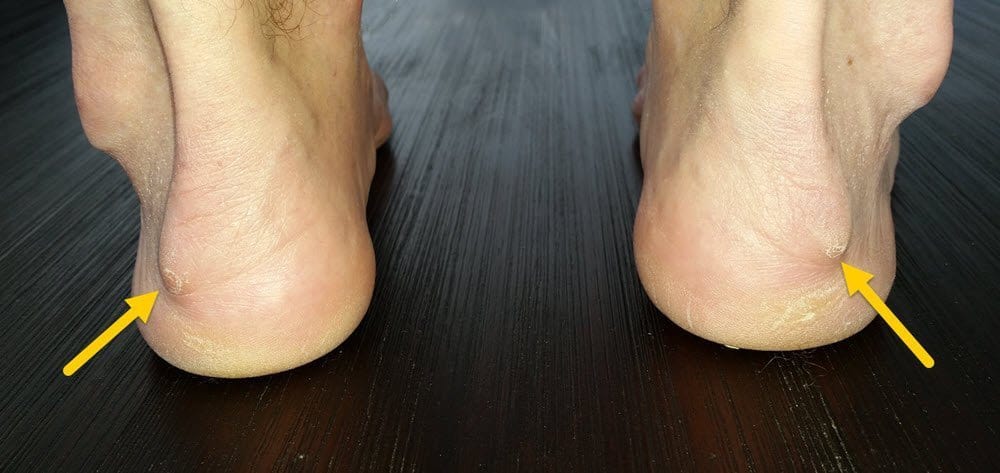
This is a actually pointy Haglund'southward Deformity. Others are not so pinpoint merely bigger and bulkier.
Not undoing your laces
If when yous put your shoes on, you force your heel over the padded heel counter with excessive force, this can wear away at the lining of the shoe. It will happen to a higher place at the heel collar rather than the heel counter beneath. This often happens when you don't undo your laces. Just another reason to undo your laces every fourth dimension ?
Heel slippage
If your heel rubs upwardly and down at the dorsum of the shoe, the shoe lining will probable wear out sooner than it ordinarily would. That makes sense, doesn't it? But think merely a trivial further. For this to happen, you'd have to have a friction situation where your sock remains in close contact and basically stuck to your skin with high friction levels. Then the abrasiveness of the sock would article of clothing away at the shoe lining. However, every bit before long as the friction situation changed and your foot moved inside the sock, your shoe would be saved from that abrasive rubbing. It's almost impossible to tell what's rubbing against what in a real-life situation, but yous get my drift. Heel slippage can be involved, but it'south not always involved. If you think information technology is, apply the heel lock lacing technique.
Stride length
Information technology's possible that in that location is more force exerted to the shoe lining at the back of the heel with a longer step length compared to a shorter stride length. Imagine stepping frontward but e'er so slightly – impact will be mainly felt by the area under the heel. Now imagine taking a big long over-stride. Sure, the bottom of the heel yet bears some force. But at that place'southward a significant amount of strength imparted to the heel counter area from the back of the heel.
Shoe lining materials
This one has to be relevant to some caste. But you're not going to exist able to tell at the shoe shop if your new shoes are more than susceptible to getting holes in them or not. I'yard not privy to the friction levels or durability of the different lining materials used in this office of the shoe and whether at that place are significant differences betwixt shoes. Nor are the people in your shoe shop, I'one thousand sure. Simply information technology makes logical sense that this could be involved. In terms of friction, the lining of shoes has to strike a balance between existence loftier friction enough to provide traction for the foot within the shoe, and low friction plenty to let the sock-covered human foot to slide in. Separately, I'm sure some materials are harder-wearing than others. I've likewise seen some shoes pill badly at the back of the heel.
Pronation?
I'thousand not buying this one. It's mentioned a lot, and then I idea I'd meliorate include it here. But I take non seen a correlation, let lone be able to explain information technology mechanically.
Fixing (and preventing) holes at the back of your shoes
I've seen and tried several things to stop the lining article of clothing through at the back of my shoes for both myself and my patients. Hither's what I've found.
Option 1: Heel-grips
These will piece of work, they will save your shoes. Because literally, yous'd have to wear all the manner through the heel grip before you got to the shoe. At that point, you'd put another sacrificial heel grip on. Even so, heel grips won't finish you from getting blisters. I still become blisters with heel grips, in fact, my blisters are worse. That'south considering the heel grip is made from a loftier friction material. The clue is in the proper noun. Grip equals high friction level. Information technology's like to moleskin. Moleskin is made of cotton, which we all know attracts water and is not a good material to apply in cicatrice prevention because with a little wet, it leads to higher friction levels.
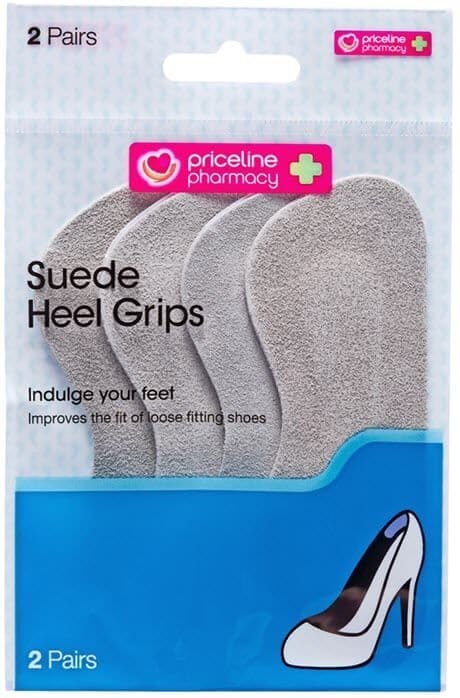
If your only issue is with your shoes and you're non getting blisters, use a heel grip. If you lot need to relieve your shoe AND your pare, it's a fiddling more than complicated.
Option 2: Denim or leather patch
This i I've personally tried in an endeavor to patch the holes in the back of my shoes. I used a soft leather. Denim is also discussed in a couple of blogs here and here. Whatsoever material is used, it is glued and/or sewn in past a bootmaker to cover the wear area. This volition surely cover the pigsty and give you more fabric to wear through before y'all got to the shoe lining over again. Simply let'southward recollect well-nigh the materials mentioned here.
Denim is 100% cotton wool (read this about moleskin) as are most cloth materials used for this purpose. While it will give your shoes an extended life, if you're also trying to prevent blisters, this is unlikely to work. It's a similar (slightly different) story for leather. It didn't help my blisters at all, but gave my shoes an extended life. At this bespeak, I just want you to retrieve moleskin / denim (ie: cotton) and leather for when we reach option 6 and look at a couple of graphs.
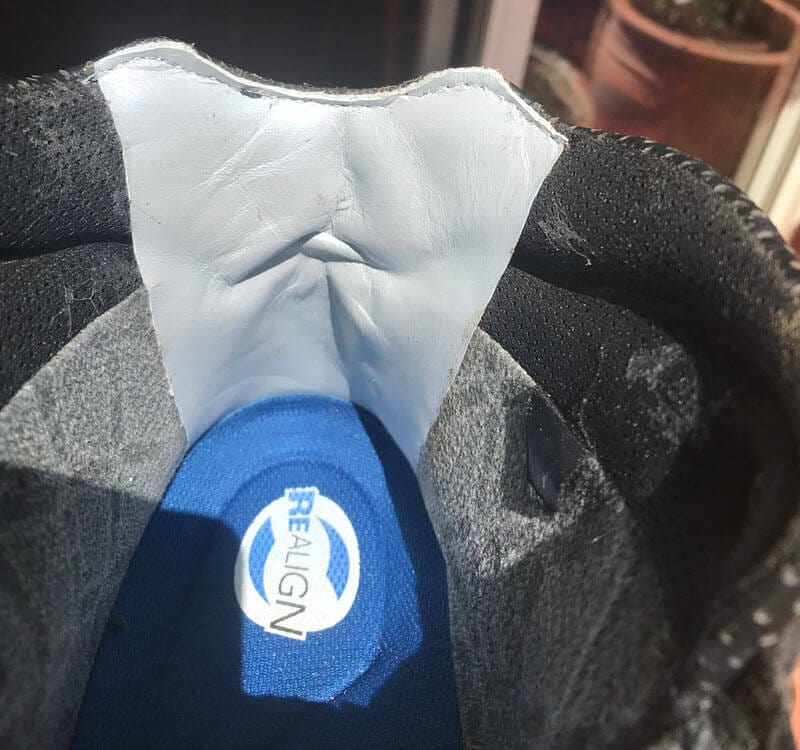
Leather glued and sewn onto the rear interior of a kick
Selection 3: Fabric covered gel sheeting
The gel material used in gel toe sleeves and caps is corking for preventing blisters. It can be purchased in adhesive sheets with a thickness of 5mm. You can trim a heel-grip shape and employ information technology to the dorsum of your shoe, simply like a heel grip. The fabric itself undergoes a lot of shear (internal stretching) via its low shear modulus. This ways the peel is spared of some shear that could lead to blisters. I've used this myself to terminate wearing holes in my shoes, and with a few patients. The difficulty with it is that it rolls downward. Due to the thickness of the material, your sock catches the meridian of the material as well easily when y'all slide your heel into your shoe and the gel ends up rolling down. It can too wear out quickly in the presence of a Haglund's deformity. Information technology's unfortunate because on the face of it, this material holds a lot of promise. However, fear non, because better options and the articulate winner is coming upwards.
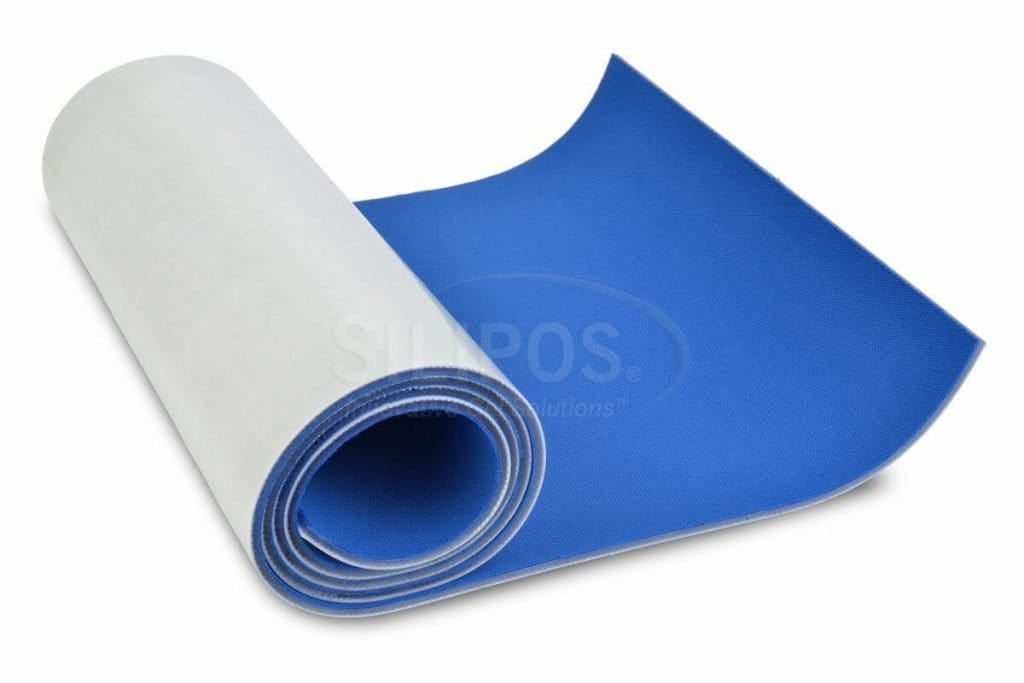
Silipos gel sheeting – can be cut to whatsoever shape
Option four: Duct record
Forget newspaper record, Fixomul or Elastoplast. Duct record is by far the all-time tape to use to embrace any holes. It presumably has lower frictional properties compared to other tapes (though I can't for the life of me find whatever Coefficient of Friction stats) and is difficult-wearing, no doubt. But you lot've got to avoid folds and creases like the images below. These areas of high focal pressure will irritate the pare. Easier said than done, I know.
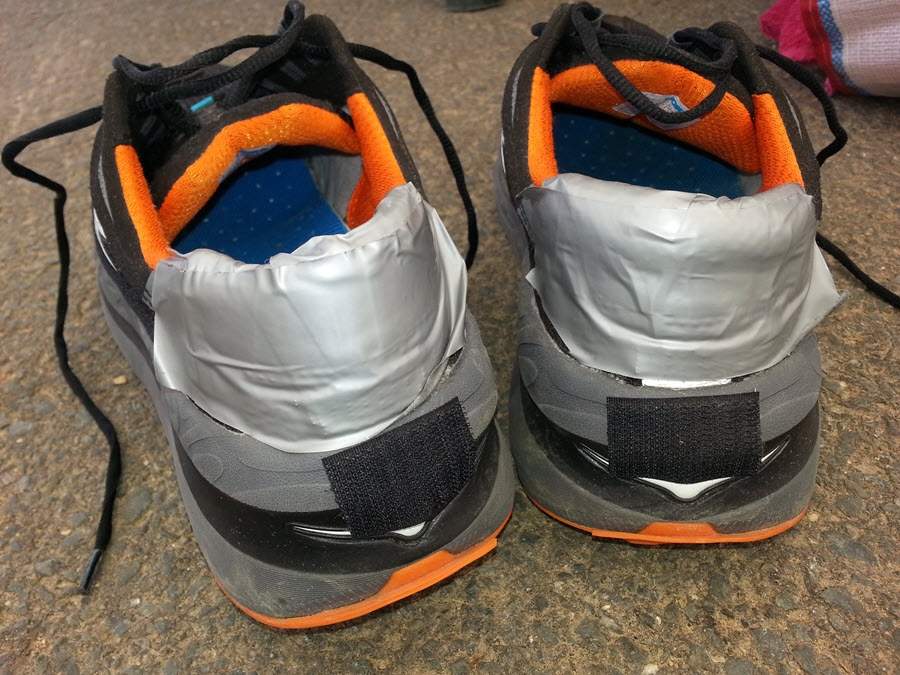
Duct record to fight holes in the dorsum of running shoes
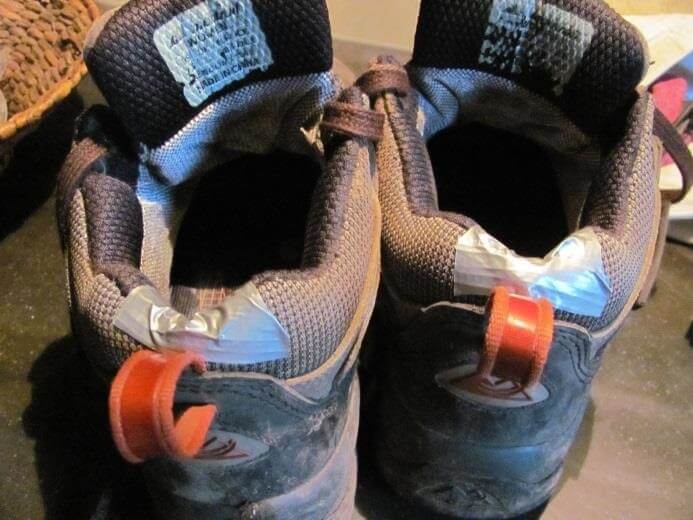
Using duct tape at the back of the shoe/kick – avoid creases and folds to prevent skin trauma
Pick 6: ENGO Blister Patches
ENGO Blister Patches are bluish adhesive stickers, purpose-made for sticking to the shoe lining to prevent blisters. They are a brilliant form of cicatrice prevention, thank you to the very low friction material that coats them. It's called PTFE and it'due south known to take a very low friction level. Teflon is made from the aforementioned PTFE textile. ENGO Patches have a COF under 0.ii in both dry and damp conditions. Accept a look at the graphs below. Note the friction levels for moleskin and leather.
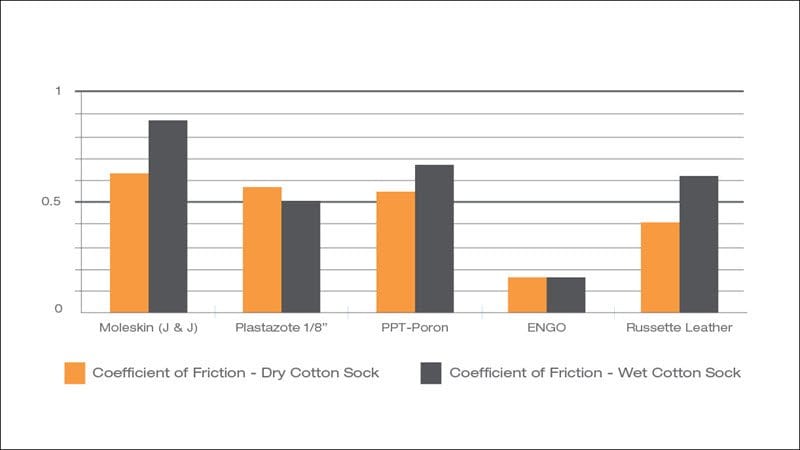
ENGO's coefficient of friction remains low in the presence of wet – Carlson (2001)
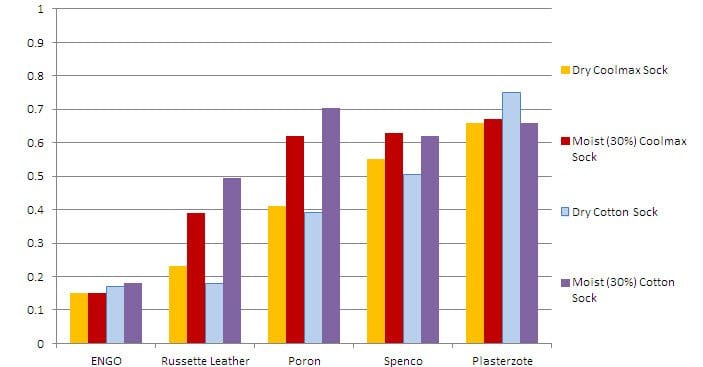
Coefficient of friction information in dry and moist weather condition – Payette (2010)
You utilise ENGO Patches to your shoe just similar a heel-grip. They're much thinner than a heel grip and and then this makes it easier to avert catching the top of the patch as your slide your heel into your shoe. However, some care is yet needed. Read this how-to for applying ENGO Patches to your footwear. They foreclose wearing at the dorsum of your shoe spectacularly! They are surprisingly hardy, lasting months and months at a time (or over a twelvemonth in my case). You can likewise utilize them to fix existing holes, like I did here on my father-in-police force'south shoes (below). I but pushed all the foam back into identify, folded the edges of the worn lining back down as best I could, and popped an ENGO Patch over it to comprehend it all upwardly. I used a large oval hither from the ENGO iv-Pack, merely you can too use the heel patches of form.
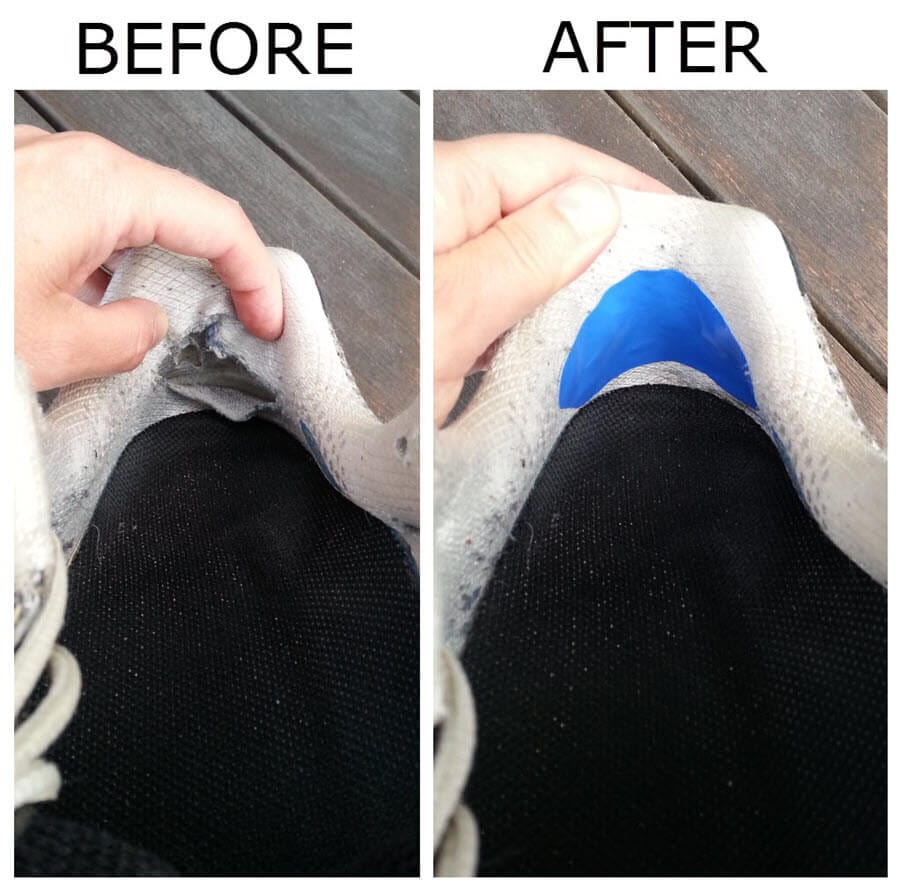
Using an Engo patch to cover a wear hole at the back of the shoe
How To Get Started With ENGO Heel Patches
References
- Carlson JM. 2001. The friction factor. OrthoKinetic Review. ane.vii Nov-December: i-3.
- Payette Thou. 2010. Friction direction for diabetic pes problems. Presented at the 36th Annual Coming together and Scientific Symposium of the American University of Orthotists and Prosthetists.
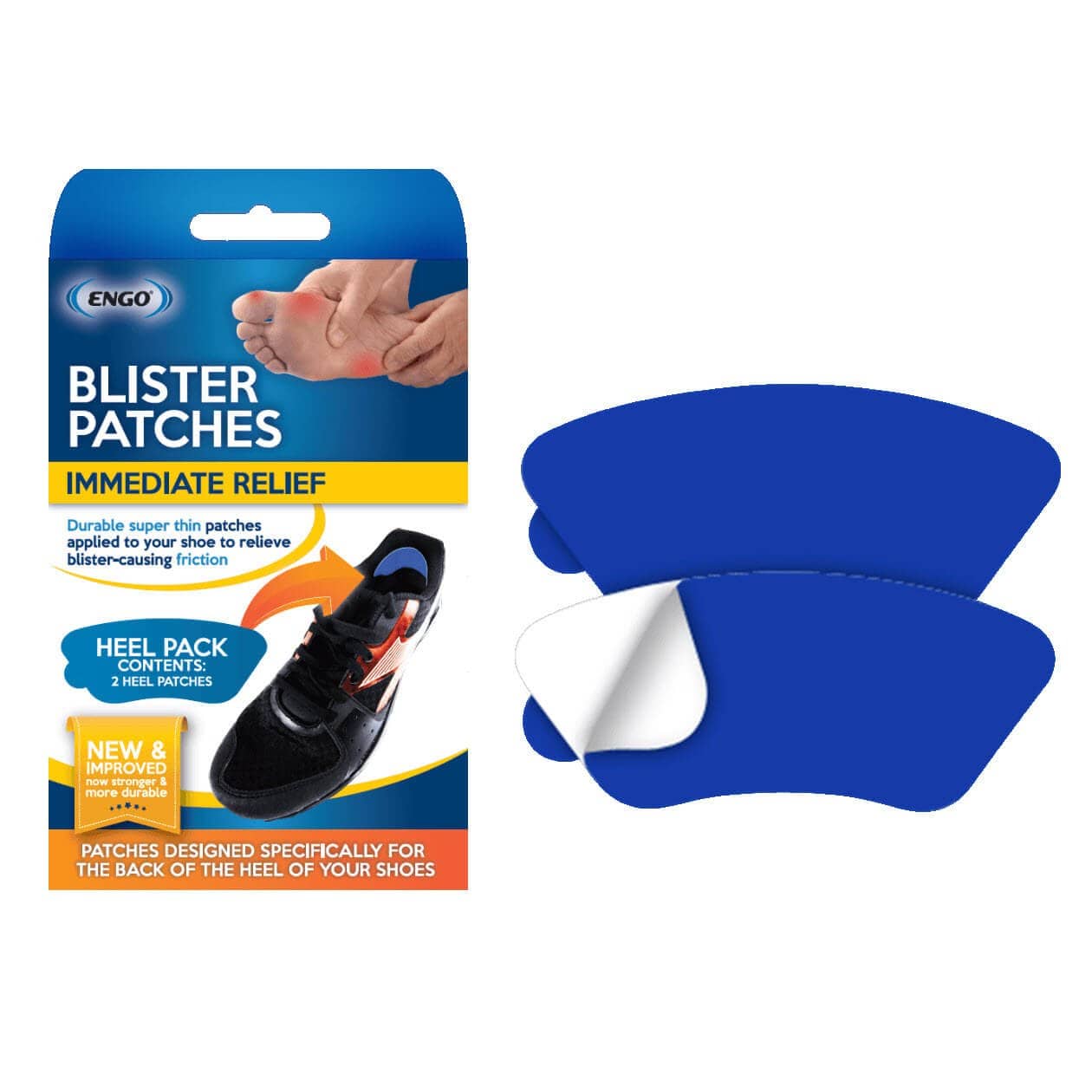
ENGO Cicatrice Patches Heel Pack
The ENGO Cicatrice Patches Heel Pack is specially designed for full coverage of back of heel blisters and to fix wearing holes in the back of the shoe.
VIEW PRODUCT

Well-nigh The Author
Podiatrist, blister decumbent ex-hockey player, foot blister thought-leader, author and educator. Can't cook. Loves test cricket.
ENGO Blister Patches Heel Pack
The ENGO Blister Patches Heel Pack is especially designed for full coverage of back of heel blisters and to fix wearing holes in the dorsum of the shoe.
VIEW PRODUCT
Related Posts
10 Comments

How To Repair Holes In Brooks Shoes,
Source: https://www.blister-prevention.com/holes-in-the-back-of-my-shoes/
Posted by: mccarthymecer1946.blogspot.com
Thank you for the article Rebecca. It'southward logical and, almost importantly, information technology includes numerous practical solutions. Thumbs up.
Thank you for the thorough item of the reason i take destroyed 5 pairs of training shoes this year solitary uppers are nearly new but holes on the inside of my left heel
Thanks for the commodity. What type of guy would you recommend for the leather glued/sewn option?
Practice you lot mean glue Allison? Shoe Goo would be a good choice. Or a bootmaker will do it all for you.
i have been wearing two pair of socks with padding which works pretty practiced for a while. in one case the hole wears in the heal of the shoe, I take a paper towel and fold it, then stick it into the heal of my shoe and slide my shoe on carefully, this works really well. As the paper towel wears and thins, I supplant information technology with another. Cheap and works well. I always thought I was i of merely a few with this problem, until I googled and got this forum.
I have a very similar trouble with work boots, Not the blisters, only the wearing down internally of the back of the work boots, backside my heel, only likle in the images!! Tried 3 different pairs of work boots, and even the more expensive ones seem to wear away too. No sign of difficult spots on my feet, an I am certain I am buying the correct sizes…..Will the a few of these options, but the cause is still a mystery, I exercise vesture the boots for an extended menstruation of time, so maybe the sweat and moisture/heat is all contributing too ???
The problem is the friction level between the shoe and the sock. You could play around with different socks, simply essentially frictional properties of shoe lining materials and socks are not available, and then nosotros're all simply guessing.
Having very high arches, when I started long distance walking 3 years ago, I went through 2 pairs of expensive shoes before putting duct tape in the heals. I waffled virtually this because, they were brand new shoes, I don't want to muck them upwards with some viscous onetime cheap duct tape! But at present that I Accept put it in my make new shoes, I Couldn't be happier with the result. Duct tape. Cheap durable, and lets my heal slide without forming blisters. I found the play a joke on is to split the tape at the top of the heal and drape it over the back of the shoe. There is unremarkably a pull tab you take to work effectually anyway and then the split lets y'all practice that, and information technology is easier to keep wrinkles and folds of the tape from happening. It'due south non pretty, but hey, pretty, is not the signal, protection is.